Crop Loss - Baling Dry Alfalfa

Steam vs Natural Dew Experiment:
In 1998, Researchers at the University of Wisconsin conducted field experiments on the effects of steam on hay during the baling process.

Two experimental conditions were evaluated in all tests. Baling at night when dew re-hydration was apparent (natural dew) and baling in the day with steam rehydration when the hay was less than 12% moisture.

Both balers (Hesston model 4900) were equipped with a plastic-covered frame that extended from the rear of the pick-up to just beyond the end of the bale chute so that material falling from the pre-compression chamber, bale chamber, and bale chute was collected. The baler was then stopped and the loss material on the frame was collected and placed in a plastic bag. Baling then proceeded until the full number of replicated bales were formed for the experimental condition.


In 1998, Researchers at the University of Wisconsin conducted field experiments on the effects of steam on hay during the baling process.

Two experimental conditions were evaluated in all tests. Baling at night when dew re-hydration was apparent (natural dew) and baling in the day with steam rehydration when the hay was less than 12% moisture.

Both balers (Hesston model 4900) were equipped with a plastic-covered frame that extended from the rear of the pick-up to just beyond the end of the bale chute so that material falling from the pre-compression chamber, bale chamber, and bale chute was collected. The baler was then stopped and the loss material on the frame was collected and placed in a plastic bag. Baling then proceeded until the full number of replicated bales were formed for the experimental condition.


Image

Two Experimental Conditions Were Evaluated

Baling at night when dew re-hydration was apparent (natural dew) and baling in the day with steam rehydration when the hay was less than 12% moisture

Both balers (Hesston model 4900) were equipped with a plastic-covered frame

that extended from the rear of the pick-up to just beyond the end of the bale chute so that material falling from the pre-compression chamber, bale chamber, and bale chute was collected.

Baling with steam has been proven to dramatically reduce leaf loss

compared to baling with natural dew.  Results are even more dramatic when dew isn't present.

The University of Wisconsin performed an independent research study on baling hay with steam. See what they found!

Image
Image

See How Much Weight Per Bale The Roberts Family Saw

Leaving green in the field means leaving green out of your wallet!

What are you leaving behind?

Leaving green in the field means leaving green out of your wallet!

What are you leaving behind?

Baling with Steam Has Been Proven to Dramatically Reduce Leaf Loss
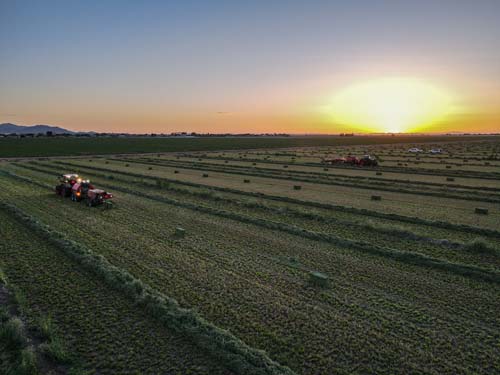
Often, the hay is either too dry or too wet and if you’re lucky, you may have a small window of opportunity when the hay is just right.

Hay producers working in arid, dry climates are often faced with the decision to either bale dry hay, which will shatter the leaves, or continue to wait for natural dew, risking further loss of quality.

Hay producers working in climates where it’s often too wet to bale at night or who receive good dew at night still experience large amounts of time during the day when the hay is too dry to bale. Being able to bale with steam when the hay is dry opens up the baling window and allows you to be more productive.

Often, the hay is either too dry or too wet and if you’re lucky, you may have a small window of opportunity when the hay is just right.

Hay producers working in arid, dry climates are often faced with the decision to either bale dry hay, which will shatter the leaves, or continue to wait for natural dew, risking further loss of quality.

Hay producers working in climates where it’s often too wet to bale at night or who receive good dew at night still experience large amounts of time during the day when the hay is too dry to bale. Being able to bale with steam when the hay is dry opens up the baling window and allows you to be more productive.

Image

Being able to bale with steam when the hay is dry

opens up the baling window and allows you to be more productive.

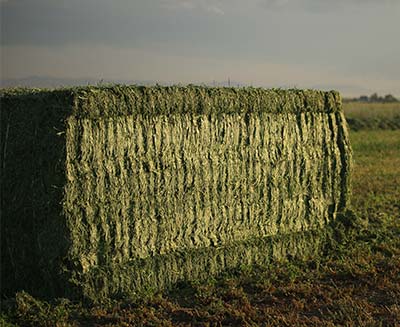
Did you know? Baling with steam can increase bale weights by 5-10% on average?

And, it's not just water weight. Most of that added weight can be attributed to having more leaves in each bale of hay.
I figure I’ve picked up at least 100-150 lbs a bale. I used to think when I first looked at it ‘well it’s all water weight,’ but it’s not. You look at the leaf in those bales and you understand exactly where it’s coming from.
Jeff Wood, Utah

Extra green in your bale means extra green in your wallet...

Added weight, among other factors, is one of the factors that help farmers pay for their machines.
I calculated everything…If everything was as bone dry like it was on first crop. It was around 15,000 bales, just on bale weight alone, to justify the steamer cost. I think you could pay it back in a year.
Brandon Yardley, Utah

Why Use Steam?

Steam is an extremely effective moisture medium for controlled hydration of hay during the baling process. One gallon of water will produce approximately 1,700 gallons of steam. Therefore, when baling hay on a warm windy afternoon you will likely add about 5-7 gallons of water in the form of steam to one ton of dry hay.
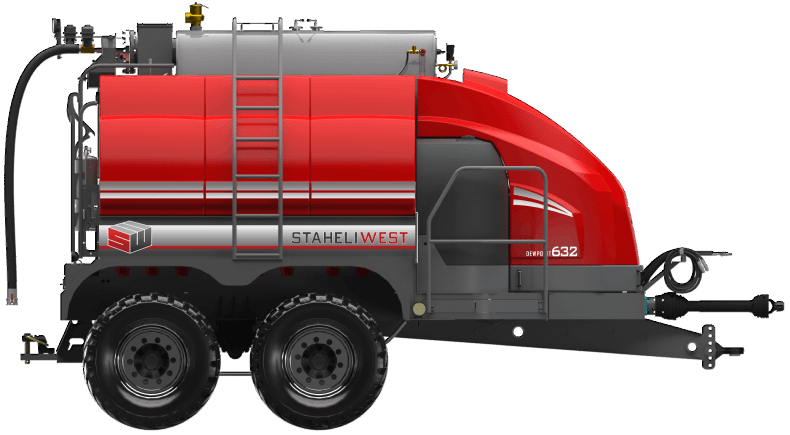

This equates to only 2-3% moisture addition by weight but this 5-7 gallons of water applied to this 1 ton of hay is converted into 8,500-12,000 gallons (or more) of steam which allows every leaf and stem in that ton of hay to be treated without becoming too wet.

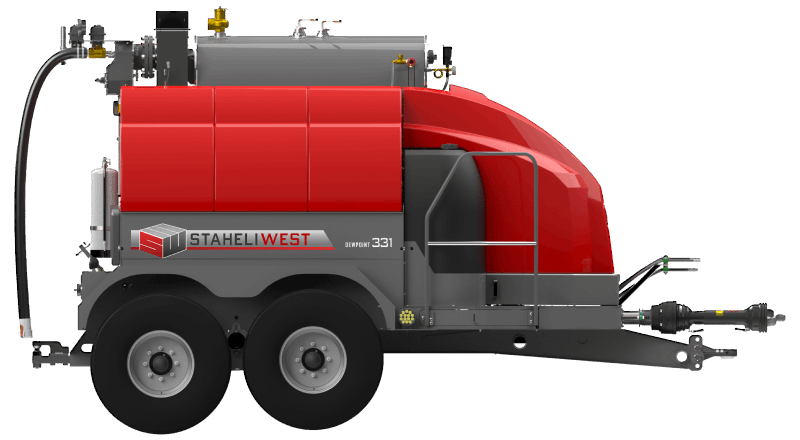
When the injected steam contacts the dry crop material it instantly condenses and bonds with other water molecules in the vicinity, which causes instant absorption into the dry crop material. This is the reason the DewPoint system works so efficiently. The machine operator has full control of baling moisture, enabling production consistency over a wide variety of ambient conditions.

Steam is an extremely effective moisture medium for controlled hydration of hay during the baling process. One gallon of water will produce approximately 1,700 gallons of steam. Therefore, when baling hay on a warm windy afternoon you will likely add about 5-7 gallons of water in the form of steam to one ton of dry hay.

This equates to only 2-3% moisture addition by weight but this 5-7 gallons of water applied to this 1 ton of hay is converted into 8,500-12,000 gallons (or more) of steam which allows every leaf and stem in that ton of hay to be treated without becoming too wet.

When the injected steam contacts the dry crop material it instantly condenses and bonds with other water molecules in the vicinity, which causes instant absorption into the dry crop material. This is the reason the DewPoint system works so efficiently. The machine operator has full control of baling moisture, enabling production consistency over a wide variety of ambient conditions.